Ricoh
May-Aug 2022

Ricoh is nearly a century-old corporation, with a product offering so vast that I probably could not count them on my toes and fingers combined
Background
The challenge they were now facing was a weak inbound strategy, especially due to minimal product marketing & sales enablement material while having such a vast collection of products
The marketing team was continuously spread thin and only created collateral on an ad-hoc basis when a prospect demanded it
Labor intensive ad-hoc content curation set the team back on their other deadlines
The turnaround time in responding to prospects and delivering assets to them was undesirable
Several sales opportunities were lost due to the marketing & sales team lengthening the sales cycle beyond the preferred timeline of the customer, causing interest to whither away
High churn due to having little to no customer support material beyond onboarding
Solution
Building an Inbound Flywheel: built a 3-stage inbound flywheel focused on attract-delight-engage
Personalize Each Stage: personalize each stage of the flywheel for each persona (i.e. industry, pain points, gain points)
Test Success / Failure: Analyze the success of the new inbound flywheel — the numbers don;t lie


The Inbound Flywheel
The first step was to map the right content to the respective stage of the inbound flywheel. As is well known, the inbound flywheel has 3 stages:
Attract
Delight
Engage
Attract
Blogs
Product Brochures
Case Studies
Engage
Competitor Analyses
Battle Cards
Product Sheets
Product Decks
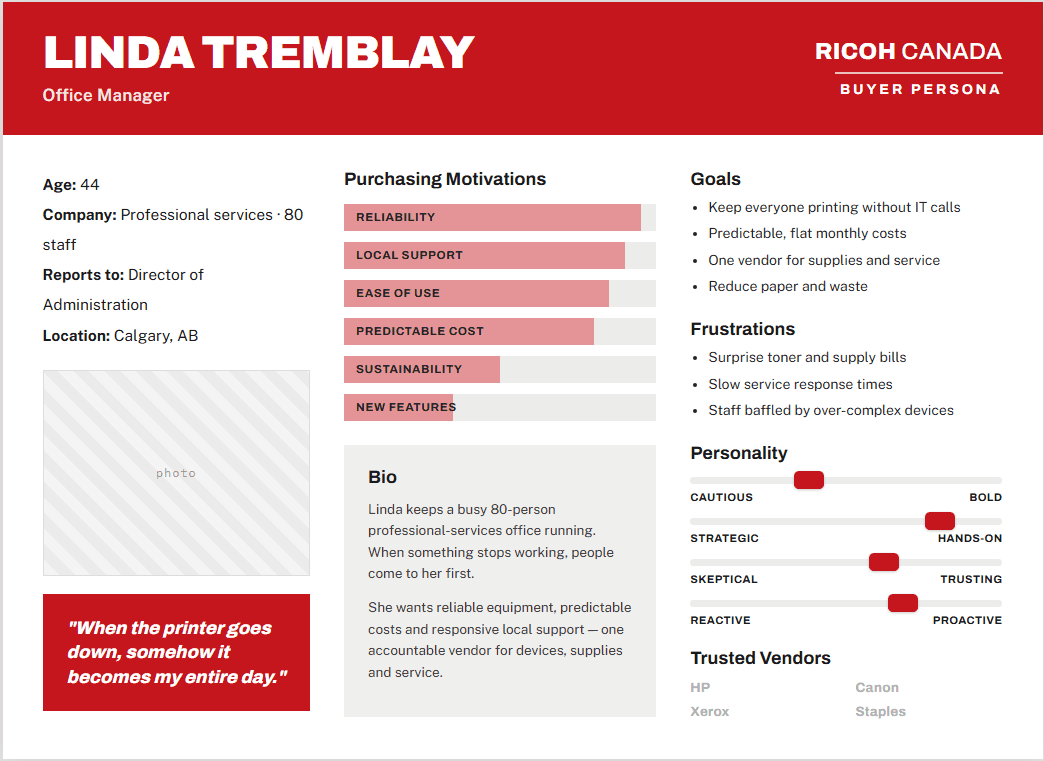
Persona Cards
Delight
Product Use Case Guides
Onboarding Manuals
Product decks
5
Competitive analyses
3
Use cases
5
Onboarding manuals
4


Inbound Flywheel
Product Marketing
Sales Enablement
Persona Creation
Competitive Analysis
Personas and Personalization
To add a layer of complexity, nearly every content type required personalization according to the persona & industry. Furthermore, as someone who had minimal design experience, I was confronted with a monumental task of enhancing my design skills.
CyberSecurity


Office Hardware


IT / Cloud Solutions


The drafting process was quite tedious as well; I worked with the Product Managers & Product Marketers for 5 different portfolios, spanning products in cybersecurity, office collaboration, cloud services and more.
There were 3 rounds of approval for every piece of content prior to it being published. This essentially meant I was responsible for overseeing the curation of dozens of content pieces that spanned each stage of the inbound flywheel.


Assets produced
29


Outcome
Atrract Stage: inbound lead capture witnessed an uplift of 21%, indicating the effectiveness of the personalized content in driving them to signing up to the call-to-action.
Engage Stage: 11% of prospects were qualified, compared to the previous qualification rate of 5%. This indicated that one of the greatest hindrances in qualifying leads was the lack of information they possessed about the product in an easily digestible format.
Delight Stage: 1 out of 5 clients were willing to either give a positive testimony, warm referral or be included in a case study. Previously, persuading a client to partake in a case study would have been a rare sight, with as little as 1 in 20 clients agreeing to one.
Lead capture uplift
21%
Qualification rate
11%
Positive testimonies post-purchase
1 in 5
Learnings
During the inbound process, a marketing team must equip the customer with all the information they need to visualize how your product will relieve their pain for them
Simply explaining the generic benefit verbally (e.g. claiming a product improves "productivity") is not sufficient. You must instead articulate exactly how it improves productivity, and even by how much if possible
It is the marketer's role to pin point exactly where, when and how their pain occurs and the practical & proven way your product will cure or prevent it for them.